Ledger Live: User Interface and Navigation

Ledger Live user interface represents how the application actually presents itself to users across their daily wallet interactions. The Ledger Live interface design balances functional density with visual clarity, providing access to the comprehensive feature set through navigation patterns that scale from simple operations through complex multi-asset management activities.
Interface quality affects how easily users actually accomplish their goals through the application beyond just whether the features technically exist. The Ledger Live application development includes substantial investment in interface refinement, with the current interface representing evolution across multiple major versions that progressively improved usability based on user feedback. Understanding the interface helps users navigate the application efficiently rather than missing functionality they didn't know existed.
This overview examines Ledger Live user interface across its primary structural elements, from main navigation through specific operational interfaces. The Ledger Live application organizes functionality through consistent navigation patterns that users learn once and then apply throughout the broader interface, with the consistency reducing the cognitive load that working through different interface conventions for different features would otherwise create.
Ledger Live Main Navigation
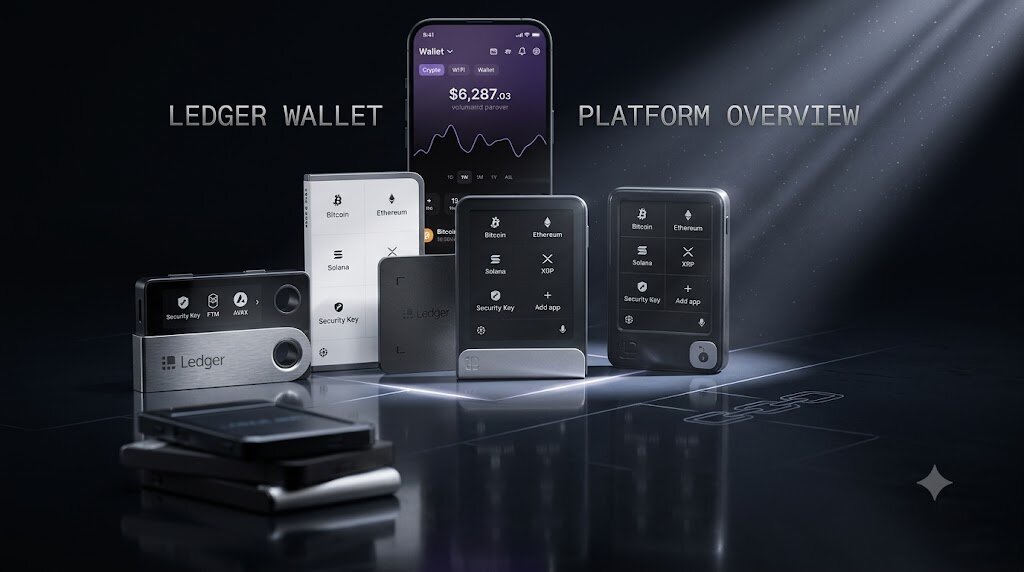
Ledger Live main navigation provides the primary path through the application's various sections. Understanding main navigation clarifies how users move through Ledger Live.
Sidebar Navigation Elements
Ledger Live sidebar navigation contains the primary links to major application sections. The Ledger Live sidebar typically appears on the left side of the desktop interface, with sections including Portfolio, Accounts, Discover, Send, Receive, Swap, Buy, and various other primary functions. Users click sidebar items to navigate between major application areas, with the navigation maintaining clear visual indication of which section is currently active. The Ledger Live sidebar remains persistently visible during normal usage, providing quick navigation regardless of which specific area users currently view. The sidebar approach scales well across the various functions that the application supports, with the consistent location making navigation predictable across the broader range of operations users might want to perform.
Top Bar Functions
Top bar functions in Ledger Live navigation handle account-spanning operations and global controls. The Ledger Live top bar typically includes search functionality, settings access, notification indicators, and various other functions that operate across the broader application rather than within specific sections. Search particularly helps users find specific accounts, transactions, or assets quickly without navigating through hierarchical menus. The top bar persistent visibility means users access these functions consistently throughout the application, regardless of which section currently appears in the main content area. The top bar design represents a common interface convention that Ledger Live applies effectively, providing access to functions that users need regularly without dedicating sidebar space to them.
Section-Specific Sub-Navigation
Section-specific sub-navigation in Ledger Live appears within individual sections that benefit from additional organizational structure. The Ledger Live application uses sub-navigation tabs or similar interface elements within sections like account details, where users navigate between transaction history, balance details, account operations, and various other account-specific views. The sub-navigation appears only when relevant rather than cluttering primary navigation with section-specific options. The hierarchical approach keeps primary navigation focused while still supporting the deeper interface complexity that comprehensive sections require. Users encountering sub-navigation typically learn each section's specific organization quickly, with the patterns being consistent enough across sections to support transfer of learning from one section to another.
| Ledger Live Navigation Element | Location | Function |
|---|---|---|
| Sidebar | Left side | Primary section navigation |
| Top bar | Top of window | Global functions |
| Sub-navigation | Within sections | Detailed organization |
| Breadcrumbs | Above content | Hierarchical context |
| Search | Top bar | Quick item finding |
| Notification panel | Top bar dropdown | Alert display |
| Account list | Sidebar or section | Account selection |
| Back buttons | Within flows | Step backward |
Ledger Live Dashboard Interface

Ledger Live dashboard interface serves as the central view that users see when opening the application. Understanding the dashboard clarifies the application's primary entry experience.
Portfolio Summary Display
Portfolio summary display dominates the Ledger Live dashboard with key information about user holdings. The Ledger Live dashboard shows total portfolio value prominently, with the value calculated using current asset prices across all accounts. Portfolio summary includes value change information showing how holdings appreciated or depreciated over selected timeframes like 24 hours, 7 days, or various other periods. The Ledger Live application updates the displayed values as market prices change and as user activity affects account balances, providing real-time portfolio awareness whenever users open the application. The portfolio summary location at the top of the dashboard reflects its importance as the information users most commonly check, with the prominent placement supporting quick portfolio status assessment during brief application sessions.
Account Balance Overview
Account balance overview in Ledger Live dashboard shows individual account information alongside the aggregate portfolio summary. The Ledger Live dashboard displays accounts with their current balances, asset types, and various other account-specific information that helps users see their holdings broken down by account rather than just as totals. The account overview typically uses card-based or list-based layouts that present multiple accounts efficiently within the available screen space. Users with many accounts see appropriate amounts of detail per account, with the design balancing information density against readability. The Ledger Live account overview supports quick navigation to specific
account details through clicks or taps, with the dashboard serving as a launching point for deeper account-specific operations users want to perform.
Recent Activity Section
Recent activity section in the Ledger Live dashboard shows recent transactions across all accounts in chronological order. The Ledger Live activity display includes transaction types, amounts, accounts affected, and timestamps for recent operations across the user's holdings. The activity section provides awareness of what's been happening across the broader portfolio without requiring users to navigate to specific account history views. The chronological organization makes it easy to spot recent operations, with the display supporting both casual review and verification that expected operations completed successfully. The Ledger Live recent activity benefits users who want consolidated awareness of cross-account activity rather than checking each account's history individually.
Ledger Live Account Interface

Ledger Live account interface handles the detailed views for individual accounts. Understanding account interfaces clarifies how users interact with specific accounts.
Account Detail Views
Account detail views in Ledger Live show comprehensive information for selected accounts. The Ledger Live account interface displays current balance, recent transactions, account address, and various other account-specific information through dedicated interface areas. Detail views include actions like sending, receiving, and various other account operations through clearly identified interface elements. The Ledger Live account detail design accommodates substantial information without becoming cluttered, with progressive
disclosure showing more detail when users specifically request it through additional interface interactions. Users spending time on individual accounts benefit from the focused interface that presents account-specific information without the noise that whole-portfolio views necessarily include.
Transaction List Presentation
Transaction list presentation in Ledger Live shows account activity through scannable list interfaces. The Ledger Live transaction lists include transaction types, amounts, counterparties, timestamps, and various other relevant information for each transaction. Filtering and sorting options let users find specific transactions efficiently across substantial transaction histories that active accounts accumulate over time. Each list item typically expands to show full transaction details when users want comprehensive information beyond the summary view. The Ledger Live transaction list presentation balances information density against readability, with the design supporting both rapid scanning and detailed examination depending on what users currently need from the history information.
Account-Level Action Buttons
Account-level action buttons in Ledger Live provide direct access to common operations from account views. The Ledger Live application places action buttons prominently within account interfaces, with buttons for sending, receiving, swapping, staking, and various other account-applicable operations. The button placement makes initiating operations straightforward without requiring users to navigate to separate sections of the application. Different accounts show different action buttons based on what operations apply to each specific account type, with the conditional display preventing confusion that uniform button sets would create when not all buttons apply to all accounts. The Ledger Live action button design represents thoughtful interface organization that minimizes the navigation steps required for common user activities.
Ledger Live Operational Interfaces

Ledger Live operational interfaces handle the specific workflows for various operations like sending, receiving, and swapping. Understanding operational interfaces clarifies how users actually execute activities.
Send Transaction Flow
Send transaction flow in Ledger Live walks users through preparing and authorizing outgoing transactions. The Ledger Live send interface includes fields for recipient addresses, amounts, network fee selection, and various other transaction parameters that users specify before authorizing the transaction. The flow includes verification steps where the application shows transaction details before sending them to the connected hardware device for signature. The Ledger Live send interface balances thoroughness against efficiency, with the workflow supporting careful transaction preparation without imposing unnecessary friction on routine operations. Error handling in the send flow catches common issues like invalid addresses or insufficient balances before users get deep into the transaction preparation, providing helpful feedback rather than just allowing problems to surface during the final signing step.
Receive Address Display
Receive address display in Ledger Live presents account addresses for incoming transactions. The Ledger Live receive interface shows addresses in both text format and QR code format, accommodating various ways that users might share addresses with senders. The interface includes verification options where users can confirm the displayed address matches what their hardware device shows, catching potential address substitution attacks that affect computers showing fake addresses. The Ledger Live receive design emphasizes the security verification step since accepting incoming transactions to wrong addresses results in losing those funds. The interface organization prioritizes the security-relevant
information while still presenting the practical aspects like the actual address that users need to communicate to senders.
Swap and Exchange Interfaces
Swap and exchange interfaces in Ledger Live handle the asset conversion workflows. The Ledger Live swap interface lets users select input and output assets, see quotes from multiple providers, and execute the chosen swap through hardware-authorized transactions. The interface displays comparative information that helps users evaluate provider options, with rate, fee, and timing differences being clear before users commit to specific providers. Currency conversion workflows include intermediate calculation steps showing expected outputs based on current rates, with the calculations updating dynamically as users adjust input amounts. The Ledger Live swap interface organization makes the comparison-shopping aspect of swap selection straightforward while still maintaining the clear path through actual execution once users decide on their preferred swap configuration.
The major Ledger Live interface navigation patterns include the following:
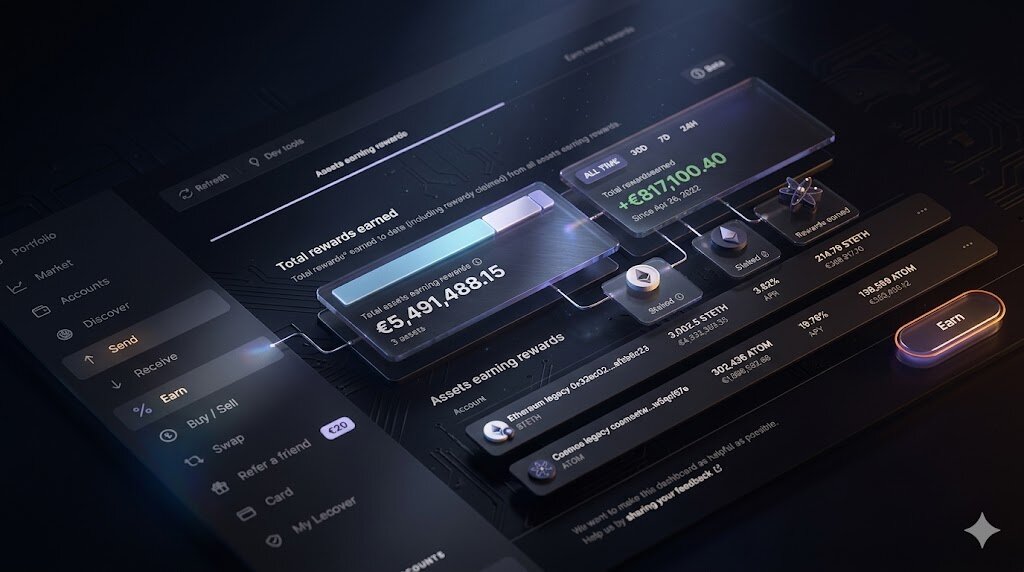
1. Sidebar selection for primary section navigation 2. Top bar utilities for global functions across sections 3. Account selection from dashboard or account list 4. Drill-down from accounts to account details 5. Sub-navigation within sections for detailed views 6. Action buttons for initiating common operations 7. Forms and flows for transaction preparation 8. Confirmation interfaces for hardware authorization
Ledger Live Customization Options

Ledger Live customization options let users adjust the interface to their preferences. Understanding customization clarifies what users can modify.
Theme and Appearance Settings
Theme and appearance settings in Ledger Live let users adjust visual aspects of the interface. The Ledger Live application supports light and dark themes that users select based on their preferences, with the themes affecting backgrounds, text colors, and various other visual elements throughout the interface. Some users prefer dark themes for reduced eye strain during extended usage or for matching their broader desktop themes, while others prefer light themes for traditional reading patterns. The Ledger Live theme selection persists across sessions, with the chosen theme applying immediately and consistently throughout the application. Beyond just light and dark options, the application supports various other visual preferences that affect how information displays throughout the broader interface.
Currency Display Preferences
Currency display preferences in Ledger Live affect how the application shows values throughout interfaces. The Ledger Live application supports various fiat currency options for displaying portfolio values and asset prices, letting users see their crypto holdings denominated in their preferred currency. Common options include USD, EUR, GBP, and various other major currencies that the application's price data sources support. The currency selection applies globally across the interface rather than just in specific sections, with consistent display reducing the mental conversion users would otherwise need. Some users running across regions sometimes change currency preferences based on their current situations, while users with stable currency preferences set their choice once and benefit from consistent display thereafter.
Language Localization
Language localization in Ledger Live makes the application accessible to users in various languages. The Ledger Live application supports multiple languages beyond English, with the localization covering interface text, menu options, and various other user-facing content. Available languages typically include major European languages, some Asian languages, and various others depending on the application's specific localization investment. Users select their preferred language through application settings, with the selection applying immediately throughout the interface. The localization helps non-English speakers use the Ledger Live application comfortably in their preferred languages, expanding the application's accessibility beyond just users comfortable with English-language software interfaces.
Ledger Live Mobile Interface
Ledger Live mobile interface adapts the desktop functionality for mobile device usage. Understanding the mobile interface clarifies how usage differs on phones and tablets.
Mobile Navigation Patterns
Mobile navigation patterns in Ledger Live differ from desktop conventions due to screen size constraints. The Ledger Live mobile interface typically uses bottom navigation tabs rather than sidebar navigation, accommodating mobile interaction patterns where thumb reach matters. The bottom tabs include primary sections that users navigate between, with the navigation being thumb-accessible during one-handed mobile usage. Mobile-specific patterns like swipe gestures and pull-to-refresh sometimes appear within Ledger Live mobile interfaces, supporting natural mobile interactions alongside the traditional tap-based navigation. The Ledger Live mobile navigation maintains conceptual consistency with desktop versions while adapting to the practical realities of mobile device usage that the smaller screens and touch input create.
Touch Interface Adaptations
Touch interface adaptations in Ledger Live mobile accommodate finger-based interaction rather than mouse precision. The Ledger Live mobile interface uses larger interactive elements than desktop counterparts, ensuring that buttons and other touch targets accommodate finger-sized interaction comfortably. Forms designed for touch input replace some traditional desktop interface conventions that work better with mouse and keyboard input. The Ledger Live mobile experience feels native to mobile rather than just being a scaled-down desktop interface, with the adaptations producing comfortable mobile usage that doesn't fight against the platform conventions users expect. Mobile-specific features like camera integration for QR code scanning appear naturally where they add value, leveraging mobile capabilities that desktop versions cannot match.
Mobile-Specific Display Choices
Mobile-specific display choices in Ledger Live optimize information presentation for smaller screens. The Ledger Live mobile interface shows less information per screen than desktop versions, with hierarchical disclosure letting users drill down for additional detail rather than presenting comprehensive information densely. Card-based layouts work well for mobile presentation, with each card containing focused information that mobile screens can display clearly. The Ledger Live mobile presentation prioritizes the most important information at each level, with secondary information accessible through additional interactions rather than crowding primary displays. The mobile-specific choices produce comfortable mobile usage despite the inherent constraints that smaller screens impose on information density compared to desktop usage scenarios.
Common Ledger Live interface characteristics across the broader application include:
- Sidebar navigation for primary section access on desktop
- Top bar for global functions and search
- Dashboard as central entry point with portfolio summary
- Account detail views with focused per-account information
- Transaction lists with filtering and sorting options
- Action buttons for initiating common operations
- Send and receive flows with verification steps
- Swap interfaces with comparative provider information
- Theme options for visual preference
- Language localization for non-English users
- Mobile interface adaptations for touch and small screens
- Consistent design patterns across sections